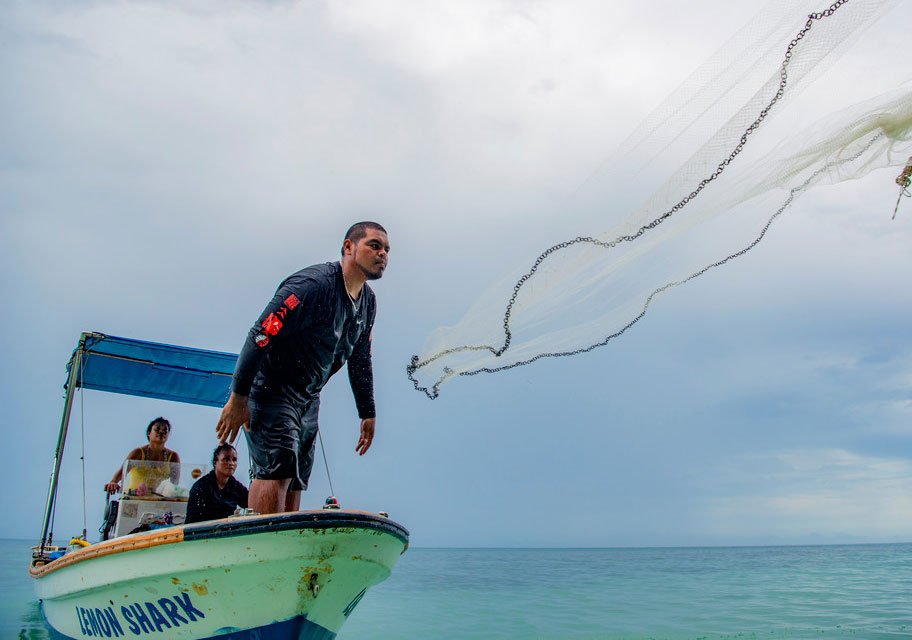
Palau, a nation of immense ecological beauty, comprises over 400 islands that rise from the Western Pacific like clusters of green mushrooms. Omar’s family has long called Melekeok home, a town of 300+ residents on the east coast of Babeldaob Island, the largest of the Palauan islands. Like all coastal communities, Melekeok is vulnerable to the compounding effects of climate change, which have already transformed the reefs of Omar’s childhood into something unrecognizable.
Ngeschsiau, a vibrant stretch of coastline containing mangroves, seagrass beds, and fringing reefs, was a cornerstone of Melekeok’s ecological, economic, and cultural prosperity. In the 1980s and ’90s, the stretch of habitat supported food security, fueled tourism, and protected homes from powerful storm surges. But by the early 2000s, Ngeschsiau entered a period of ecological crisis. Overfishing, ocean acidification, and sedimentary runoff from the construction of the 53-mile Palau Compact Road devastated the ecosystem. Today, the coastline’s once crystal-clear waters are warm, murky with high sedimentation, and emptied of an abundance of marine life.
In a recent survey of Ngeschsiau’s mangrove area, fishers counted 43 species of sea cucumber and nothing else. “Spearfishing now is hard, but I love it at the same time,” said Omar. “On my own, I try to be persistent and not give up because spearfishing also clears my mind and puts food on the table every night. And at the same time, it helps me with the shortcomings in my life and with my large family.”
As Palau faces the pressures of a shifting world, the Melekeok community is working to bridge traditional practices with modern science to protect and restore the ancestral waters that bring such deep meaning to their life.